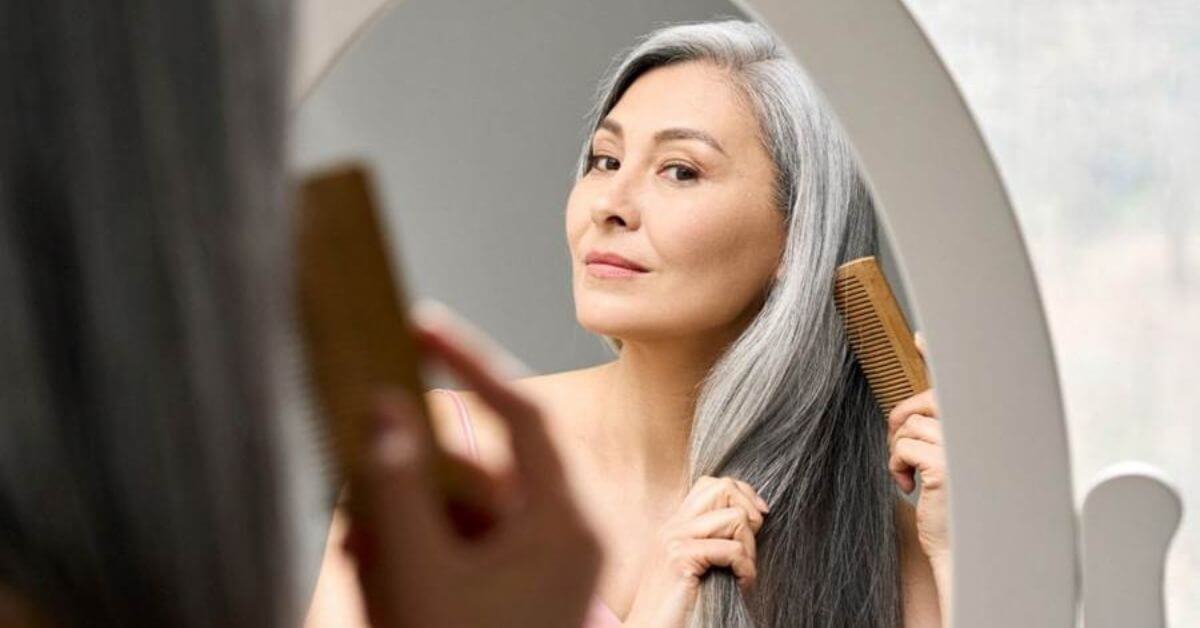
How Menopause Changes Hair: What Every Woman Should Know
✨At a Glance
Hair can look, feel, and behave differently during menopause, but those changes don’t have to shake your confidence. Some changes are perfectly normal and you can learn to handle them. Try these hair care tips and you’ll be just fine.
It can be unsettling when your hair starts behaving differently than it used to. Maybe it feels drier, looks thinner, frizzes more easily, or no longer holds a style the same way.
Simple updates to your hair routine or products can help you work with these changes rather than fight them. Here’s what every woman should know about the common ways that menopause changes hair.
Based on my personal experience, you might find that your hair changes multiple times during and after menopause. Even in my sixties, long after menopause, my hair would go through stages of dryness, thinning, frizzies, and strange reactions to color. I went to my stylist one day near tears because my hair was suddenly feeling and behaving like straw or hay!
It May Feel Drier
During menopause, hair may feel less soft or hydrated. It may look dull faster, feel rough at the ends, or need more conditioning than it once did. This can happen gradually, so many women don’t notice it until their usual shampoo or styling routine stops working as well.
Dryness can also make locks more prone to tangles, especially after washing or sleeping. A gentle conditioner, a wide-tooth comb, and less heat styling can make daily care easier. Hair often responds best when moisture is added consistently rather than all at once, so use gentle, hydrating products regularly.
Thinning Becomes More Noticeable
Hair may begin to look thinner around the part, hairline, or crown during midlife. This may happen because hormonal shifts can affect the hair growth cycle, so some strands may shed sooner or grow back more slowly.
Strands can also become finer with age, which makes the scalp more visible in certain areas.
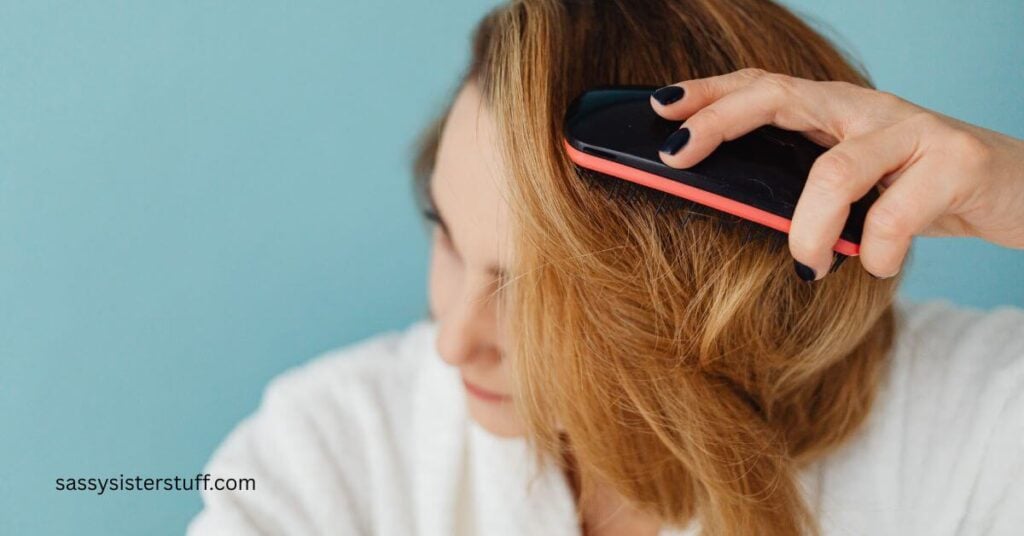
Just FYI, thyroid changes and problems can impact thinning hair too. I haven’t had my thyroid for many years due to a cancer scare and I’ve had problems with thinning hair since the surgery. I try to brush my hair for a while before bed because it’s supposed to stimulate growth.
Here are helpful tips for styling and maintaining thinning hair:
- Use a lightweight conditioner mainly on the mid-lengths and ends.
- Choose soft brushes or wide-tooth combs to reduce pulling.
- Avoid very tight hairstyles that create tension on the scalp.
- Try soft layers or face-framing pieces to add movement and shape.
- Use lighter styling products that will not weigh strands down.
- Add gentle volume at the roots instead of teasing or backcombing.
- Limit high heat to protect delicate strands.
There are many ways to manage hair loss during midlife, so try different strategies until you see that something is working. But give each one time because you don’t see changes in thinning, or hair loss, immediately.
Texture Can Change Unexpectedly
Menopause can make hair texture feel different from what it did for decades. Straight hair may develop waves, curls may become less predictable, and smooth tresses may suddenly feel coarse. This can be annoying when you are used to styling in a certain way.
Changing texture often needs a better balance between softness and strength. Before trying special treatments, determine if your hair needs protein or moisture. Hair that feels limp or overly stretchy may need different support than dry, brittle, or rough strands. Talk with your hair stylist about what might be your best remedy.
Embrace New Texture
A change in texture doesn’t mean something is wrong with your hair. It may just need a different cut, a gentler drying routine, or less heat styling. Letting your hair air-dry for a while before using a blow dryer can also help you see its natural shape.
Notice what your hair does after washing, styling, sleeping, or spending time in humid weather. If your hair feels dry one day and limp the next, it may not need the same product every time.
Frizz May Increase
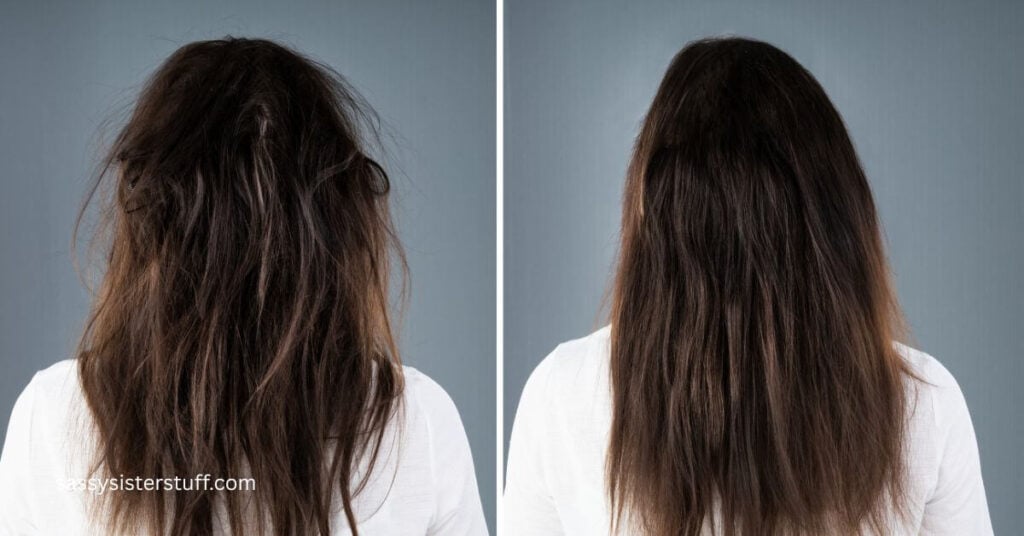
During menopause, locks may not retain moisture as evenly, which can cause strands to swell, lift, or separate. This can be especially frustrating in damp climates or during seasonal weather changes. Frizz is often a sign that hair needs gentler handling rather than heavier styling.
To reduce frizz, you can:
- Blot wet hair with a soft towel or cotton T-shirt instead of rubbing it.
- Apply conditioner or leave-in products while hair is still damp.
- Use a wide-tooth comb to detangle gently after washing.
- Sleep on a smooth pillowcase to cut down on overnight friction.
- Lower the heat setting on blow dryers, curling irons, and flat irons.
- Avoid brushing dry hair too much if it tends to puff up.
- Let hair air-dry partway before styling to help it settle more smoothly.
- Choose lighter smoothing products so hair does not feel heavy or stiff.
The Scalp Feels More Sensitive
Some women notice that their scalp feels drier, tighter, or more reactive during menopause. Lower estrogen levels can affect oil production, leaving the scalp feeling less balanced than before.
A shampoo that once felt fine may suddenly feel too strong. Styling sprays, fragrance-heavy products, or frequent coloring may also feel more noticeable on the scalp.
I have had a very itchy scalp as I’ve aged. I spoke to my dermatologist about it and she gave me two shampoo prescriptions that have helped. I also find that Head & Shoulders works for an itchy scalp but it’s a little heavy to use all the time. So I use several different kinds of shampoo to help manage my itchy scalp, dry hair, and well water buildup that weighs down my hair. I change my shower regimen based on how my hair is behaving.
A sensitive-feeling scalp often benefits from simple care. Rather than adding many new products, try adjusting one part of your routine at a time. This can help you figure out what is soothing your scalp and what may be making it feel worse.
Choose gentle formulas and rinse thoroughly. Avoid scratching when the scalp feels dry or itchy. If discomfort persists, get guidance from a dermatologist, doctor, or trusted hairstylist.
Growth May Be Slower
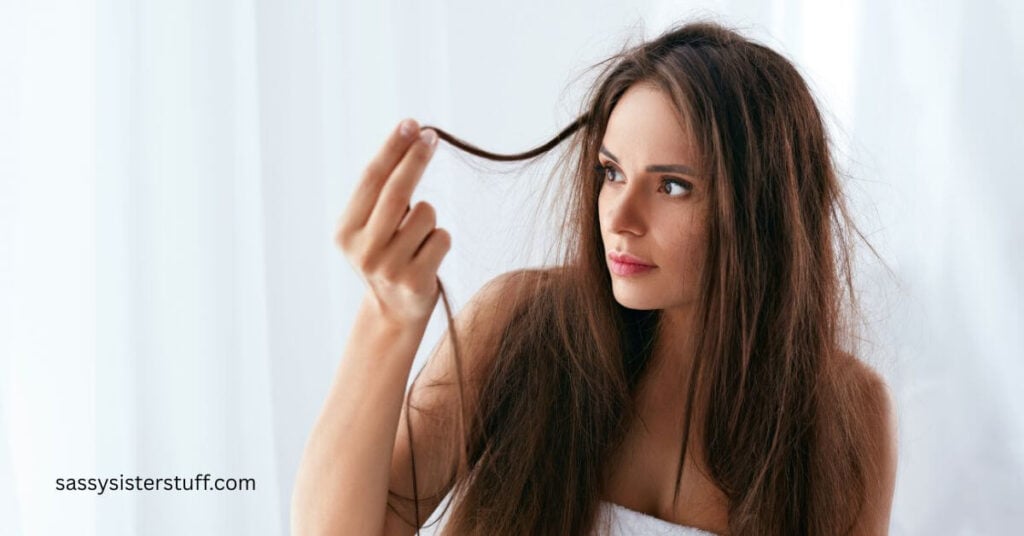
Many women feel as though their hair doesn’t grow as quickly during menopause. Ends may break more easily, making it seem like length has stalled even when hair is still growing. This can be discouraging if you are trying to grow out a style, color, or cut.
Protecting the ends is one of the most effective ways to keep hair looking healthier. Use conditioner where your hair is driest, avoid rough towel-drying, and be careful when detangling knots. Regular small trims can also remove dry or split ends before they travel higher up the strand.
Styling Needs More Patience
In middle age, curls may fall faster, volume may fade sooner, or hair may take longer to dry. Start your routine a little earlier when you can, especially on wash days, so your hair has more time to dry and settle.
You may also need to try lighter styling products, lower heat settings, or different brushes to see what works better for your hair now.
On busy mornings, you may want to look polished without spending too much time on your hair. Try building a few easy “backup styles” for days when your hair will not cooperate. A soft clip, loose bun, low ponytail, or headband looks stylish without requiring perfection.
Pin to your Favorite Pinterest Board for Later
Menopause Hair Changes: What’s Actually Happening
Menopause triggers hair thinning, increased shedding, and severe dryness. As estrogen levels plummet, hair follicles shrink and the growth cycle shortens, causing hairs to become weaker and more brittle.
Simultaneously, declining hormones reduce natural scalp oils, resulting in wiry, dull, and breakage-prone strands. Understanding exactly what happens and how to manage it can help restore your hair’s health.
What’s Happening to Your Hair
- Hair Thinning: A drop in estrogen shortens the hair’s growth (anagen) phase and lengthens the resting (telogen) phase, leading to overall loss of volume and a widening part.
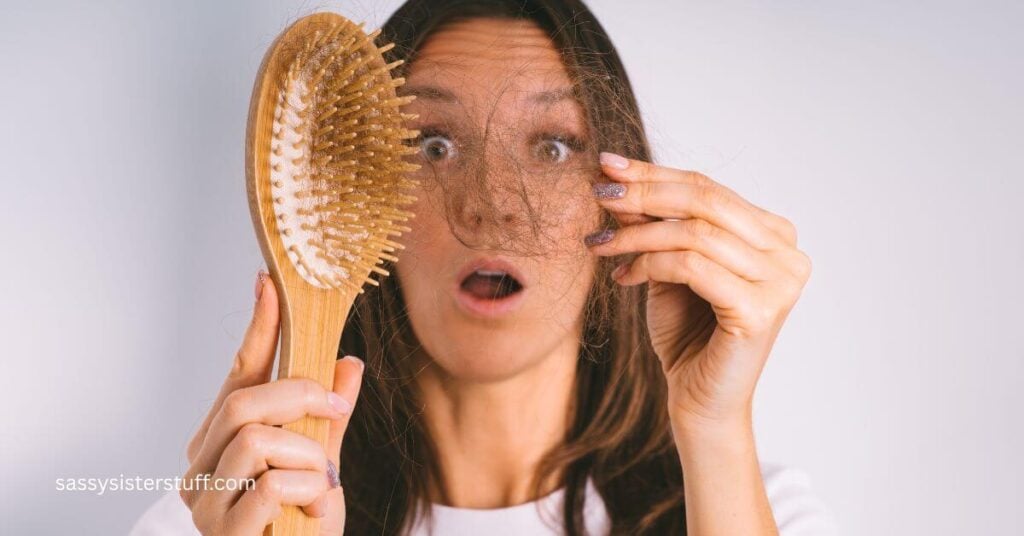
- Increased Shedding: Because more hairs shift into the resting phase, you will likely notice significantly more hair in your brush or shower drain.
- Dryness and Breakage: Decreased estrogen means less sebum (natural oil) production by your scalp. This robs the hair of its natural lubrication, leading to split ends and a wiry texture.
- Unwanted Facial Hair: The drop in estrogen can cause a relative imbalance where androgens (male hormones) become more dominant. This can lead to new or thicker hair growth on the chin, chest, or abdomen.
How to Manage Menopause Hair Changes
- Switch to Gentle, Hydrating Products: Opt for sulfate-free, moisturizing shampoos and deep conditioners infused with biotin, keratin, and natural oils like jojoba or argan.
- Reduce Heat and Chemical Damage: Since your hair is more fragile, minimize the use of flat irons and curling irons, and always use a heat protectant.
- Consider Medical Treatments: For noticeable thinning, topical treatments like over-the-counter Minoxidil (Rogaine) are often recommended.
- Eat a Nutrient-Rich Diet: Focus on proteins, healthy fats, and essential minerals like iron and zinc to support hair health from the inside out.
- Consult a Professional: If you are experiencing significant hair loss, consult a dermatologist to rule out other factors (like thyroid issues) and get personalized, evidence-based treatment plans.
Final Thoughts about How Menopause Changes Hair
How menopause changes hair can look different from season to season. You might deal with dryness and frizz to slower growth and a new texture. What you need to remember is that these changes are common, manageable, and not a reason to lose confidence.
A gentler routine, knowledge, and the right products can make your locks easier to care for. Try these tips to rediscover what works best for your tresses and you’ll be able to move forward with confidence again.
For more articles about hair changes during menopause, read these related article next:
- Should You Go Gray? The Pros and Cons of Coloring Your Hair in Midlife
- Restore the Shine: How to Manage Dry Hair as You Age
With light and love,
Susan 💜