
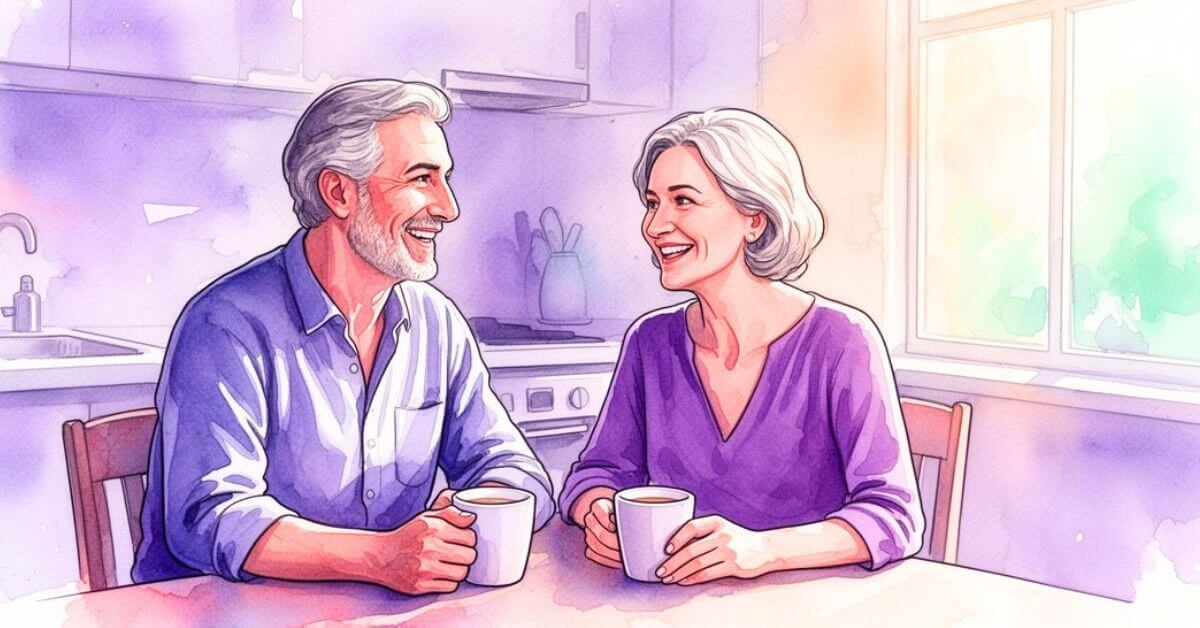
7 Practical Ways to Keep Peace at Home After Retirement
✨Key Takeaways
Retirement can shift the rhythm of your home life in way you never anticipated. Learn gentle, practical ways to protect personal space and enjoy this new season together with less stress. It will take open, honest communication, patience with each other, building new routines that work for both of you, and respect. You’ll need an adjustment period that includes talking about the small stuff in a timely manner (so it doesn’t become BIG STUFF), identifying personal space and hobbies for both of you, and establishing a new household routine. Retirement is such an exciting time—be sure to address the emotional and mental health pieces of retirement.
Retirement can sound dreamy from a distance. No alarm clock. No commute. No packed lunches. No Monday morning rush. I know because I’ve been there and done that:) But once both partners are home more often, the house can start to feel a little different. Maybe even a little crowded. The same kitchen, living room, bedroom, and hallway that once felt roomy enough for the whole family may suddenly feel like shared territory with too many opinions.
Learning how to keep peace at home after retirement is not about pretending everything feels easy. It is about noticing the small changes before they turn into big frustrations. Retirement relationship changes often show up in everyday moments. One person wants quiet in the morning. The other wants to talk through the day’s plans before breakfast. One person leaves hobby supplies on the table. The other wants every surface clear by noon.
The good news is that home can still feel calm, comfortable, and loving. It usually takes a few honest conversations, some time for reflection, and a healthy respect for each other’s needs for both connection and breathing room.

Keep Peace at Home after Retirement Meaning
Keeping peace at home after retirement requires balancing togetherness with personal independence. Establishing clear daily routines, respecting each other’s boundaries, and maintaining individual hobbies will help prevent friction and ensure a more harmonious household.
Transitioning to retirement means adjusting to 24/7 together-time, which can easily cause friction. To maintain a peaceful home, actively re-establish personal boundaries, carve out solo routines, redefine household chores, and maintain a shared calendar.
Other Retirement Topics that Should be Addressed
This article speaks to the day-to-day routines and life together under the same roof after retirement. Some of you may be like my husband and me during the pandemic: I’m retired and he was abruptly home for four months due to the pandemic. It was very much like retirement and we had not prepared for so much togetherness. (His mother lives with us, too:) During that time, he decided he might keep working longer than he originally planned. 🤓 And he’s still working!
Based on our experience, you should definitely prepare for togetherness and discuss how to keep peace at home after retirement. It’s not commonly one of the most important issues people think about in preparation for retirement. Those issues are 1. financial and legal planning, 2. health and insurance planning, and 3. living arrangements. For helpful information on these topics, I found these great articles at the National Institute on Aging and Senior Living. (Click the links to go directly to the articles.)
One more topic that seems to be on the agenda for retired couples is end-of-life planning. That topic is covered at this link here on Sassy Sister Stuff: Exploring Burial Options for Yourself and Loved Ones. Just click the link.
I think we’ve got you covered for retirement now. Read on for help with learning how to prepare for so much togetherness—emotionally and mentally.
1. Expect an Adjustment Period
Even happy changes like retirement can feel awkward at first. Retirement changes schedules, routines, responsibilities, and personal space. If one or both of you spent decades working outside the home, you may not be used to sharing so many daytime hours together. Or, even having so much time for conversation with your spouse.
That does not mean anything is wrong. It means you are learning a new pattern. It’s very important to remember and respect this learning curve.
Give yourselves time to settle in. The first few months may include little frustrations that feel bigger than they really are. Someone may interrupt too often. Someone may suddenly have strong opinions about how the dishwasher is loaded. Someone may discover that their partner has a very loud phone voice.
Take a breath. Laugh when you can. This stage is about adjustment, not a space or time for blame.
2. Talk About the Small Stuff Early
Many household arguments are not really about the thing being argued over. They are about feeling unheard or surprised by a change in routine.
Feeling unheard or being surprised by a change in routine are reasons why small conversations matter. Talk about the everyday details and irritations before either one of you becomes resentful. Don’t let the little issues become a big issue.
These are some things to think about and talk about before issues arise:
- Who likes it to be quiet in the morning?
- Who is an early riser and who prefers nights?
- When is a good time to run errands?
- Are there chores that need to be divided differently now?
- Does one person need the television lower, the kitchen cleaner, or the afternoon left open?
- Who’s going to be making dinner now?
- Who jumps out of bed at the crack of dawn and starts yakking?
- What days of the week, and times, are you each going to be busy with an activity?
These conversations do not need to be dramatic. In fact, they work best when they are simple.
Try saying, “I love having more time together, but I still need an hour to myself in the morning.” That lands much better than waiting until you are annoyed by the coffee grinder and the mysterious socks on the floor.
Pin to your favorite Pinterest Board for Later
3. Protect Personal Space Without Taking It Personally
Needing personal space does not mean you love someone less. It means you are human.
When both people are home more often, shared rooms can start feeling like too much work. The living room becomes a reading space, television zone, phone-call area, and nap spot. The kitchen becomes a planning center and conversation hub. Before long, everyone is slightly in everyone else’s way, and quite annoyed.
Designated personal space helps prevent that.
It might be a chair near a sunny window, a desk in a guest room, a hobby table in the basement, a garage workspace, or a corner where one person can read without interruption. For some households, a flexible room of your own can make it easier to enjoy hobbies or quiet time without turning shared spaces into daily negotiation zones.
The important part is not the size of the designated spaces. It is the understanding behind it. Sometimes, it’s the compromise.
Everyone needs and deserves a spot where they can relax, think, create, or simply be left alone for a while.
4. Build Routines that Leave Room to Breathe
Before retirement, routines often happen automatically. Work hours, commutes, appointments, and outside responsibilities create structure. After retirement, that structure may need to be rebuilt on purpose.
One of the best ways to keep peace at home after retirement is to create a rhythm that gives each person a little predictability without making the days feel stiff or over planned.
Maybe you have coffee together in the morning, then you each do your own thing until lunch. Maybe Tuesdays are for errands, Thursdays are for lunch out, and Sundays are for family calls and activities. Maybe one person takes a walk while the other enjoys quiet time at home.
The goal is not to schedule every minute. The goal is to keep the days from becoming one long stretch of “What are we doing now?” Keep the days flexible to some degree while also building in some structure so you both know what to expect.
Togetherness feels better when it is balanced with independence.
5. Update Household Agreements, Chores, and Task Lists
Retirement often changes who does what around the house. Tasks that made sense years ago may no longer feel fair or practical now.
Maybe one person used to handle dinner because the other got home late. Maybe one person managed appointments because their work schedule was more flexible. Maybe one person handled most of the cleaning, shopping, or family communication simply because that is how things happened.
Now is a good time to update household agreements, chores, and task lists.
Sit down and talk through the basics: meals, groceries, laundry, cleaning, bills, errands, home projects, and family plans. This does not have to feel like a business meeting. Think of it as making life easier for both of you. Both of you should choose what you prefer to do, or what you do well.
A fair home rhythm helps reduce resentment. It also prevents one person from feeling like they retired from a job only to become the full-time manager of everything else.
6. Keep Your Own Interests and Hobbies Alive
Retirement can create a lot of togetherness, but one person should not have to become another person’s entire social life and emotional outlet.
Stay active with your own interests and hobbies.
My husband’s doctor even told him that he needed to make his poker games two nights a week non-negotiables. At first I was irritated by that idea, but then I realized it made sense if we are going to respect each other’s space.
That might mean meeting friends for lunch, taking a class, volunteering, gardening, reading, crafting, walking, joining a group, or finally making time for something you used to push aside. Personal interests give you energy, confidence, and something fresh to bring back into the relationship.
This is especially important for women who have spent years caring for children, partners, parents, homes, careers, and everyone else’s needs. Retirement can be a beautiful time to ask, “What do I enjoy now?”
You are allowed to have your own life inside this shared season.
7. Choose Connection Over Constant Correction
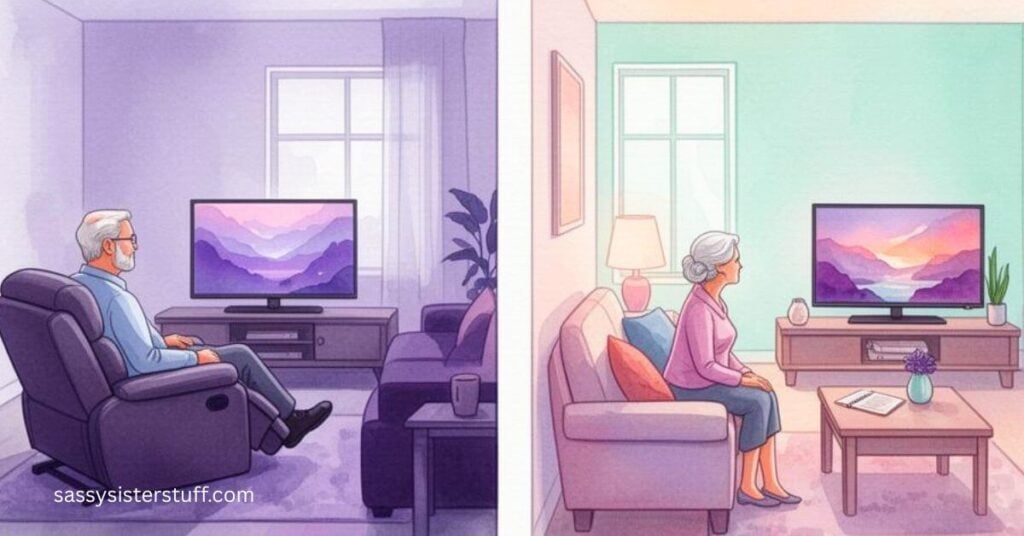
When two people spend more time at home, there are more chances to notice every little habit. The humming. The cabinet doors. The way someone somehow uses three cups before lunch. The running commentary during television shows. (OMGosh, this is me! We now watch TV in two separate rooms because he doesn’t like to talk during shows. I talk non-stop.😂)
Some things need a conversation. Other things need grace (or TVs in two separate rooms).
Peace grows when both people learn the difference between what needs conversation and what needs grace.
Try to notice what is still good. Say thank you. Share small jokes. Let minor quirks stay minor. Ask for what you need without turning every irritation into a character flaw.
A peaceful home is not one where nobody annoys anyone. That place does not exist. A peaceful home is one where both people feel respected, appreciated, and free to be themselves.
Final Thoughts: Learning Your New Rhythm Together
Retirement can be a sweet season, but it is still a transition. It changes time, space, routines, and expectations. It can bring more closeness, but it can also reveal where each person needs more independence and connection.
Retirement relationship changes are easier to handle when both people have room to breathe and a shared commitment to kindness in the small moments. Remember, you’ve probably made this work for many years, so it will be worth your efforts to figure out this new life.
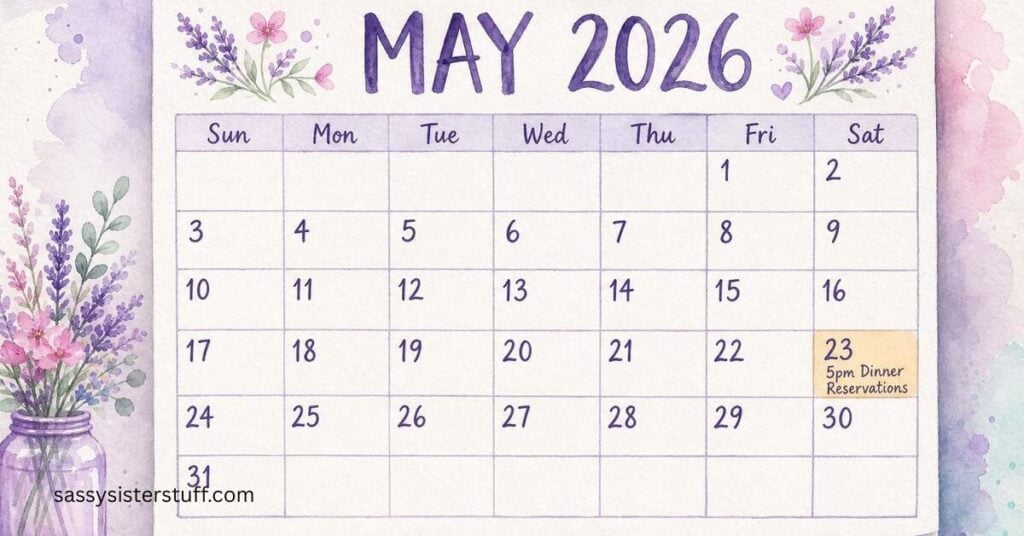
My husband and I have been married for 45 years tomorrow. It just so happens that May 23 falls on a Saturday so we are both available to celebrate by going to dinner together. After some adjustment to my retirement, I’ve learned that sometimes I need to take the bull by the horn and make decisions for both of us. And that’s exactly what I did for our anniversary. 😜
Tomorrow night, we have reservations for dinner at 5pm at the Melting Pot in Annapolis. I made the reservations and then told him to put it on his calendar! Just the two of us, no one else! At this point, we’ve learned to live with my retirement just fine. That’s the way we have to do things sometimes! 💯
Remember, you are not starting over. You are simply learning a new rhythm together.
If you need more guidance and support with retirement and transitions, you should check out these related articles next:
- Hobbies That Will Make You Feel More Productive in Retirement
- How I Found My Passion and Purpose in Retirement
- How to Survive Major Transitions in Life
And, although I did not specifically mention travel in retirement, it’s a great way to spend your time together and these Sassy Sister Stuff articles will be very helpful:
- 30 Reasons Why Traveling Is Important to Your Overall Well-Being
- Adventure Mindset After 50: Why Trying New Things Changes Everything
- My 31 BEST Tips for Traveling with Chronic Pain
With light and love,
Susan 💜