
Beyond the Basement: How to do a Midlife Heirloom Audit Without Overwhelm
Key Takeaways
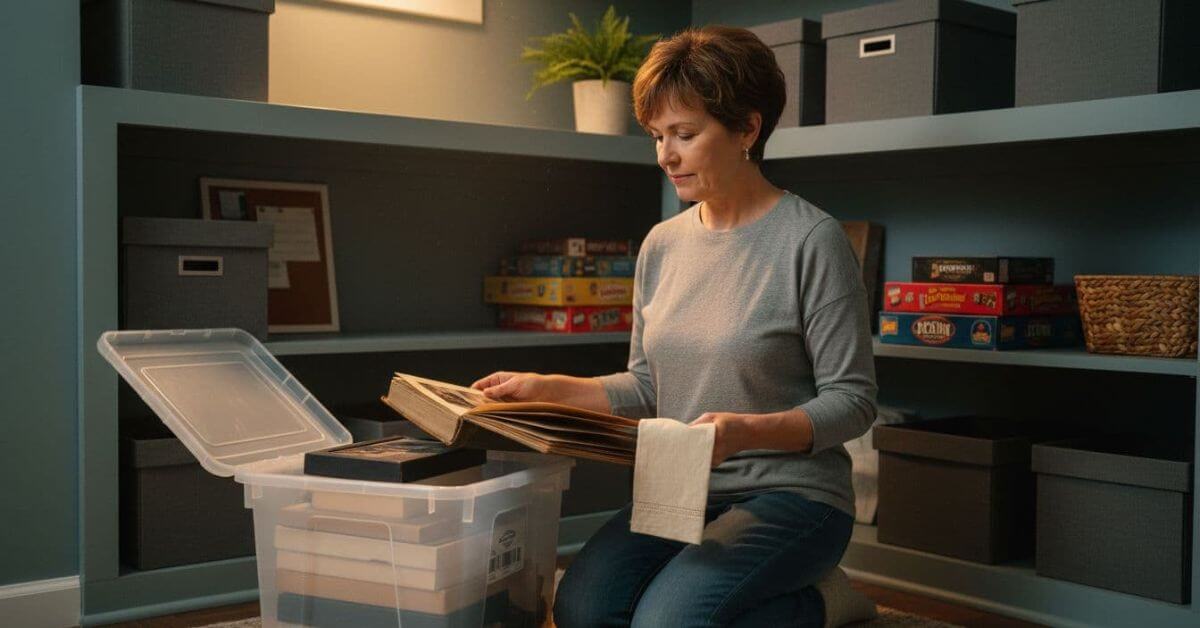
If you’re in midlife or beyond, it may be time for a decluttering plan that helps you with generations of boxes that have found their way to your basement. Many women have a quiet belief that they have to save it all. But a midlife heirloom audit is a simple review of what stays, what gets shared, what can leave, and what needs a real home (instead of a box in your basement). You do not need a harsh purge. You need a calm step-by-step process that helps you move forward. In this article, you’ll get ten steps to help you make decisions with intention and without overwhelm.
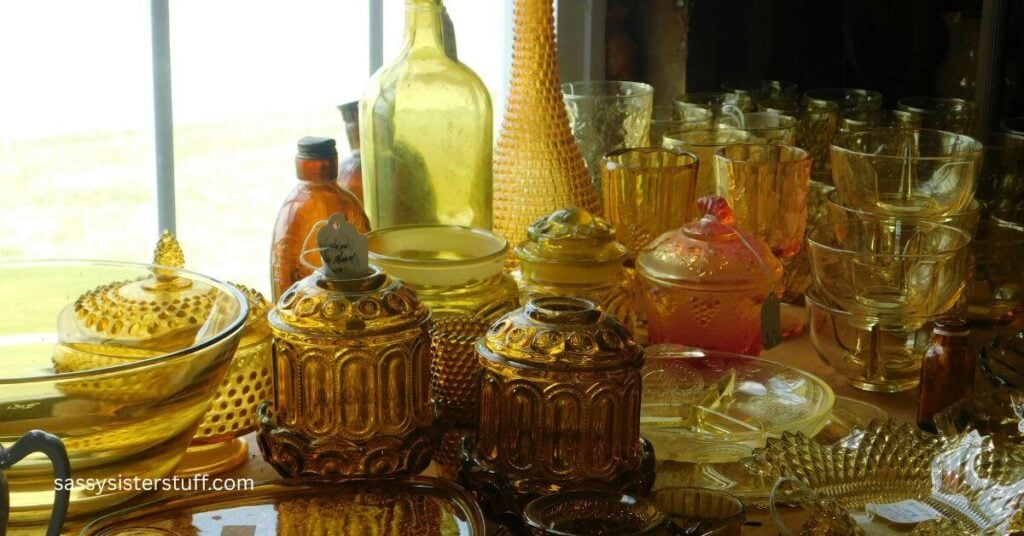
If your closet, attic, spare room. or basement is full of family keepsakes and collectibles, you are not alone. Many midlife women are storing boxes of dishes, photos, linens, letters, and small treasures that came from parents, grandparents, or other loved ones. It all adds up quickly and can become clutter.
Although these items often feel like clutter, there are many characteristics of heirlooms and many types of family heirlooms. According to Merriam-Webster, an heirloom is something of special value handed down from one generation to another. When these items accumulate in your basement, it becomes necessary to do a midlife heirloom audit to make space for your life now.
A midlife heirloom audit is a simple way to sort years of inherited items plus your own stored collectibles, so you can decide what to keep, what to share, what to donate or sell, and what to let go. It is not about erasing family history. It is about making sure the things in your home still fit your life now.
When you do a midlife heirloom audit, you do not need to clear everything in one day. It can be something you do over time. You only need a simple plan, a few honest questions, and enough courage to get started.

Let’s look at clear and intentional steps to start letting go of family belongings and inherited items. This is going to be a simple way to do some sentimental decluttering!
Step 1: Set yourself up before you sort anything
Do not open every box and hope for the best. That is how people get stuck.
Instead, prepare first. A little setup will save you a lot of frustration later.
Gather these items:
- A few empty boxes or bags
- Sticky labels or painter’s tape
- A notebook or simple list
- Your phone for quick photos
- Water and a snack
Then choose a short work session. Thirty to sixty minutes is enough. You are not trying to finish everything. You are trying to make steady progress without draining yourself.
Decide when you will stop. A clear ending keeps this from turning into an all-day emotional mess.
Start small. One short session is enough to begin.
Step 2: Pick one small area, not the whole basement
Choose one shelf, one tote, or one basement corner. That one spot is enough.
Small wins calm your nervous system and build trust with yourself. You see progress faster, and you are less likely to shut down. A 30 to 60 minute session works better than a six-hour push, especially when each object has a story attached to it.
Set a timer. When it rings, stop and reset. You can always come back tomorrow with clearer eyes.
This is one of the most important parts of the process.
Step 3: Sort everything into four simple groups
Pre-deciding your categories saves energy. Otherwise, every item becomes a brand-new debate.
This quick guide keeps you moving:
| Category | What It Means |
|---|---|
| Keep | It fits your life now, and you know where it will live. |
| Gift to family | Someone wants it and will take it soon. |
| Donate or sell | It has value or use, but not in your home. |
| Not sure | You need more time, but not today. |
The not sure box matters more than most people think. It gives you breathing room, and it prevents that frozen moment when every decision feels too loaded. Label it with a review date, then keep going.
Keep what you can love on purpose, not what you save out of duty.
Step 4: Ask better questions as you sort
Once you have a simple setup, the real work begins. This part is not about proving your love for the past. It is about deciding what belongs in your present home.
That shift changes everything.
A good midlife heirloom audit asks whether an item still fits your values, your space, and your daily life. Some pieces do. Others are only hanging on because no one ever gave you permission to question them.
The real challenge is not always the object. It is the emotion attached to it.
So instead of asking, “Should I keep this because it came from my mother?” try asking better questions.
Use questions like these:
- Do I use this?
- Do I want to display this?
- Am I holding this for my past, or my present life?
- Would I repair this if it broke?
- If I needed to move, would I want to pack and move this?
- Would I buy this today if it were not already in my family?
- Does this fit my home, my style, and my life right now?
- Does this bring warmth, beauty, or usefulness?
- Am I keeping this out of love, or out of guilt?
These questions help you separate true value from inherited pressure. They also help separate the item from the person you associate it with.
That matters because some things feel meaningful but still do not belong in your home now. You are allowed to love or respect the person and still release the item.
A useful heirloom should fit your life now, not just your memory.
A good midlife heirloom audit asks whether an item still fits your values, your space, and your daily life. Some pieces do. Others are only hanging on because no one ever gave you permission to question them.
Step 5: Keep one special piece instead of a whole collection
You do not need to keep every matching item to honor a memory.
One teacup can stand in for an entire china set. One quilt can represent a whole stack of fabric. One handwritten recipe card can carry the feeling of a whole kitchen drawer.
This is called representative keeping, and it can make a big difference in your decluttering plan.
Ask yourself:
- What one piece best tells the story?
- What item do I truly love?
- Which piece will I actually use or display?
- Which item feels most connected to my memory of that person?
When you choose one meaningful piece, it is more likely to stay visible and appreciated. A whole collection shoved into storage often disappears from family life anyway and gets passed on to another generation.
If you are unsure, line similar items up together. Patterns show up fast, duplicates become easier to spot, and one favorite usually rises to the top. Yay!
Step 6: Decide what happens next, right away
Once you make a decision, do not leave the item sitting in a pile forever.
A pile with no next step becomes next year’s problem. So, once you decide, move the item into action as soon as you can. Don’t let it drift back into a random tote.
Momentum matters here. A clear decision deserves a clear follow-through.
If you are keeping it
Move the item to its new home immediately. Don’t let it sit around cluttering a space that has already been decluttered!
If you are giving it to a family member
Do not assume someone wants it just because they are related to you.
Ask first. Send a photo. Share the story. Then ask if they would like it and when they can take it.
You may find that they only want one item, not ten. They may want the recipe, not the casserole dish. They may want the letter, not the whole box of paper goods.
That answer is useful, even if it is not what you expected.
If you are donating or selling it
Move quickly.
If the item is usable, schedule a donation pickup, load the car, or set it by the door with a deadline. If it has value, list it or get it appraised. Do not let it sit in limbo.
If you worry about moving too fast, it also helps to review decluttering regrets including heirlooms before you clear the donate box.
The longer it stays in your house, the more likely it is to become a permanent resident again.
If you are not sure
Set it aside in a clearly marked box and give yourself a return date.
The goal is not to avoid the decision forever. The goal is to avoid forcing a rushed choice.
Every item should move toward its next home, not just stay in yours by default.
Step 7: Photograph or digitize what you can before letting it go
Sometimes the hardest part of releasing an heirloom is the fear of losing the memory tied to it.
A photo can help.
Before you let an item go, take a picture of it. If it is a letter, recipe, program, postcard, or other paper item, scan it if possible. Save it in a labeled folder on your phone or computer.
You can keep the memory without keeping the object.
That simple step can make the release feel gentler and more complete.
It can also help you feel more confident when you are sorting sentimental family items later.
Step 8: Store the keepsakes you keep in a way that makes sense
The items you keep deserve better than a forgotten basement pile.
If something matters, give it a real home.
Here are a few easy storage ideas:
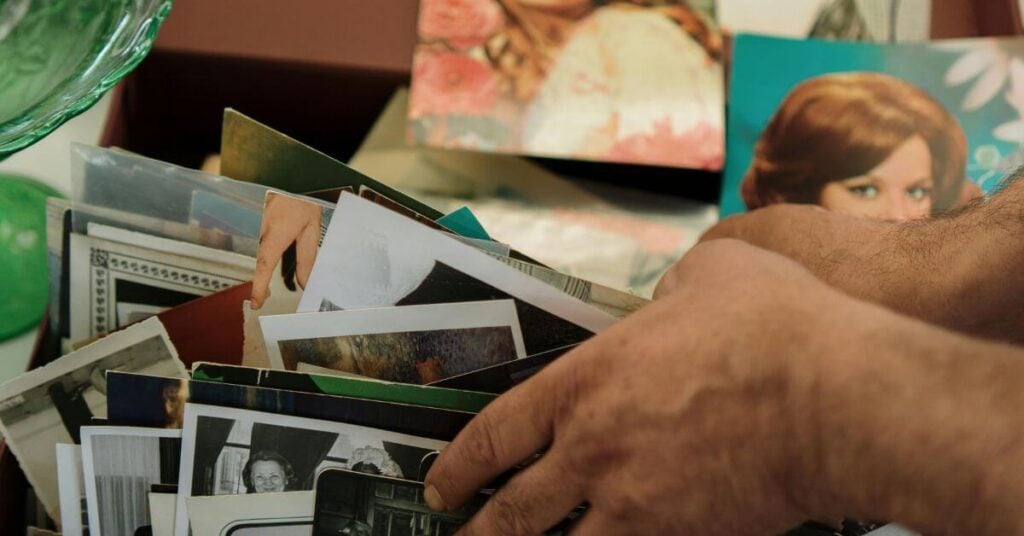
- Use acid-free folders or boxes for photos and paper keepsakes.
- Wrap fragile items in soft tissue or cloth.
- Store small treasures in labeled containers.
- Keep like items together.
- Put display pieces where you can actually see them.
This is not about perfect organization. It is about care and access.
A quilt folded at the foot of a bed can bring more joy than a quilt buried in a storage tote. A framed recipe on the wall can mean more than a stack of recipes no one opens.
The best keepsakes are not the ones hidden the deepest. They are the ones still living in your home.
Step 9: Make a simple heirloom list
Once you finish sorting, write down what you kept.
Your list can be simple:
- Item name
- Who it belonged to
- Why you kept it
- Where it is stored
- Who might want it later
This helps in two ways.
First, it gives you peace of mind. You will not forget where things are tucked away.
Second, it helps your family later. If something matters enough to keep, it should also be easy to understand.
You are making things clearer for yourself now and for the people who may handle these items someday.
Step 10: Let go without guilt
This may be the hardest step of all.
Many women were taught that keeping family things is a sign of love. But love is not measured by how much you store in your basement.
You are allowed to keep what matters and release what does not fit.
You are allowed to say no to objects that bring more stress than comfort.
You are allowed to honor family history without becoming the keeper of every box, dish, and faded piece of fabric.
Ask yourself one final question: Am I keeping this because I truly want it, or because I feel responsible for it?
That question can bring a lot of clarity.
If the answer is guilt, pressure, or fear, it may be time to let it go. If the answer is beauty, use, memory, or real connection, it may deserve to stay.
Either way, you are making a thoughtful choice. That is what matters.
Frequently Asked Questions (FAQs) about Decluttering Family Heirlooms
A Quick Recap: How to do a Midlife Heirloom Audit
If you want the short version of how to do a midlife heirloom audit, here it is:
- Gather your supplies.
- Pick one small area at a time.
- Sort into four categories.
- Ask honest questions about each item.
- Keep one special piece of a set instead of everything.
- Pass items on with intention (ask first).
- Photograph or digitize before releasing (if you have doubts).
- Store what stays in a real home.
- Make a simple list of items you are keeping.
- Let go without guilt.
Bottom line: You do not need to keep every inherited or collected item in your home. Keep what has meaning, use, or a designated space in your home now, and release the rest with intentional loving care.
A basement full of heirlooms can feel heavy. But once you start sorting with calm eyes and clear questions, the weight begins to lift.
You are not erasing your family history. You are curating it. And that is a loving thing to do.
This is Part 3 of an heirloom series here on Sassy Sister Stuff. I hope these articles have helped you move from understanding to feelings to action. Part 1 of the series about choosing which family heirlooms truly matter helped you with the initial decision-making process. Then Part 2 about the emotional side of sorting heirlooms helped you understand the weight of memory. And now you should be ready to sort what is still sitting in boxes, bins, closets, and basement corners. Best wishes! You’ve got this!
With light and love,
Susan 💜