
7 Daily Habits to Help You Find Calm, Presence, and Focus
I don’t know who needs to hear this, but in this crazy, fast-moving world, we all need to find calm, presence, and focus. Taking care of your body with exercise and good food is important, but if your mind is spinning a mile a minute, your mental. emotional, and spiritual well-being is missing out.
If you’re like me, life can feel totally overwhelming sometimes. The news is blasting 24/7, your phone and email are pinging from every direction, your playlists or podcasts are on nonstop, and social media… well, we all know how that goes. And that’s before we even think about real life!
Ladies over 50, it’s time to quiet the chaos in your mind and take control of your daily calm. Midlife brings plenty of challenges without adding extra stress. You probably rock your career and social life, but your mindfulness, focus, and inner peace deserve attention too.
Here’s a fun fact: calm people are often more attractive. Yep — it’s true! So let’s get calm and focused, be present, and feel fabulous while we’re at it. Below are 7 daily habits to help you manage stress, boost mindfulness, stay present, and find focus every single day.
1. Quiet Your Mind
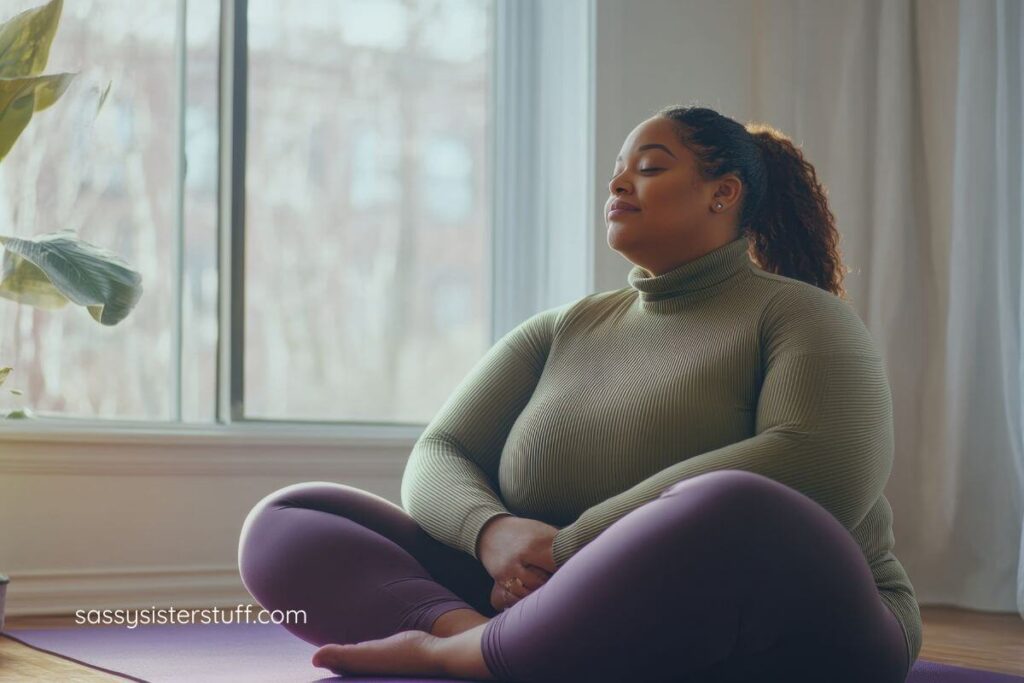
A quiet mind isn’t an empty mind — it’s a mind that finally has space to breathe. When you learn to quiet your thoughts, you create room for clarity, emotional balance, and inner peace. This simple habit helps reduce stress, soothe racing thoughts, and support better focus throughout the day. For many women in midlife, quieting the mind becomes essential for protecting your well-being and returning to yourself.
How to Quiet Your Mind
- Start your morning with two minutes of intentional stillness before looking at your phone.
- Practice slow, deep breathing to interrupt anxious thought loops.
- Replace overwhelming thoughts with a grounding phrase like “I am safe” or “One thing at a time.”
- Spend a few minutes journaling to clear mental clutter.
2. Be Present and Grounded in the Now
Being present means fully experiencing the moment you’re in rather than worrying about yesterday or jumping ahead to tomorrow. When you’re grounded, your nervous system settles, your stress decreases, and your attention sharpens. This habit supports mindfulness, emotional regulation, and a slower, more intentional life — something many midlife women crave.
How to Be Present and Grounded
- Use your senses to anchor yourself: notice 3 things you see, 2 you feel, 1 you hear.
- Take “pause moments” throughout the day — while making coffee, folding laundry, or walking your dog.
- Limit multitasking and focus on one task at a time.
- Create digital boundaries to reduce distractions and increase real-life presence.

3. Let Go of Material Things
Letting go of material things isn’t about minimalism or deprivation — it’s about releasing what weighs you down so you can create more peace and clarity. Studies consistently show that physical clutter leads to mental clutter, increased anxiety, and decision fatigue. When you simplify your space, you give your mind a chance to rest.
How to Release Material Clutter
- Choose one small space to declutter each week — a drawer, shelf, or cabinet.
- Keep only what is useful, meaningful, or brings you joy.
- Donate or repurpose items you no longer need.
- Practice mindful shopping so you avoid bringing unnecessary stress into your home.
4. Be Alone with Your Thoughts
This habit helps you reconnect with your inner voice — the one that often gets drowned out by responsibilities, noise, and other people’s expectations. Being alone with your thoughts builds self-awareness, emotional resilience, and greater clarity about what truly matters at this stage of life.
How to Spend Time with Your Thoughts
- Take a quiet walk without music or podcasts.
- Sit outside for five minutes each day and simply notice your thoughts as they come.
- Do a brief “thought check-in” at the end of the day.
- Try meditation or breathwork to create mental space and deeper reflection.
5. Find Gratitude in the Simple Things
Gratitude is one of the most powerful habits for increasing happiness, reducing stress, and improving emotional well-being. When you learn to appreciate everyday moments — a warm cup of coffee, a soft blanket, a peaceful evening — your life begins to feel fuller, calmer, and more joyful. Gratitude is grounding, healing, and incredibly supportive for women in midlife.
How to Practice Simple Gratitude
- Write down one small thing you’re grateful for each morning.
- Pause during the day to notice something beautiful or comforting.
- Share moments of gratitude with a friend or partner.
- Create a “gratitude jar” and add notes anytime you feel grateful.
6. Accept What Is
Acceptance doesn’t mean you agree with everything or stop wanting change — it means releasing resistance and finding peace where you are right now. When you accept what is, you reduce emotional suffering, calm your nervous system, and improve your ability to respond instead of react. This habit encourages surrender, inner strength, and emotional maturity.
How to Practice Acceptance
- Notice when you’re resisting something you cannot control.
- Use a grounding phrase like, “This is where I am, and I can work with it.”
- Let go of perfectionism and unrealistic expectations.
- Practice forgiveness — for yourself and others — to create mental freedom.
Pin to Pinterest for Later
Do you have a Sassy Sister Stuff Board?
7. Practice Self-Compassion
Self-compassion is treating yourself with the same kindness you would offer a friend. It’s about softening your inner critic, honoring your needs, and supporting yourself through the ups and downs of midlife. This habit improves mental health, resilience, confidence, and overall happiness.
How to Practice Self-Compassion
- Speak to yourself gently, especially on hard days.
- Let yourself rest without guilt.
- Acknowledge your feelings instead of pushing them aside.
- Celebrate small wins and recognize your progress.

Frequently Asked Questions
Below are answers to the most common questions about mindfulness, emotional well-being, and simple habits to help you feel more centered every day.
1. What Are the Best Daily Habits to Help You Stay Calm and Focused?
Some of the best daily habits for staying calm and focused include quieting your mind, practicing mindfulness, grounding yourself in the present moment, simplifying your surroundings, and using gratitude to shift your mindset. These practices help reduce stress, improve emotional balance, and strengthen your ability to stay centered throughout the day.
*Many people—especially women in midlife—find that even small habits like deep breathing, slow mornings, or limiting digital noise make a big difference in mental clarity and inner peace.
2. How Can I Quiet My Mind When My Thoughts Won’t Slow Down?
Quieting your mind starts with interrupting the cycle of racing thoughts. Try deep breathing, mindfulness moments, grounding techniques, journaling, or stepping away from overstimulating environments.
*Your mind doesn’t need to be totally silent—it just needs space to settle. Creating even a few minutes of intentional stillness gives your nervous system a chance to reset and helps you feel more centered, calm, and emotionally steady.
3. What Does It Mean to Be Present and Live in the Moment?
Being present means bringing your attention back to what’s happening right now instead of replaying the past or worrying about the future. It’s a core part of mindfulness and emotional well-being.
*Living in the moment helps reduce stress, boosts focus, and increases your sense of calm. Simple grounding practices—like noticing your breath, using your five senses, or fully engaging in one task—can help you connect more deeply to your day.
4. How Does Letting Go of Material Things Improve My Inner Peace?
Letting go of material things reduces visual clutter, mental overwhelm, and emotional stress. Research shows that clutter can increase anxiety and make it harder to relax or focus.
*When you simplify your space, you create mental breathing room. This supports clarity, calm, and a peaceful home environment—especially important for women navigating midlife transitions, caregiving, or lifestyle changes.
5. Why Is Spending Time Alone with My Thoughts Good for Me?
Being alone with your thoughts helps build self-awareness, emotional resilience, problem-solving skills, and inner clarity.
*Many people stay busy to avoid uncomfortable feelings, but quiet reflection helps you process emotions, reduce stress, and reconnect with your inner voice.
*A few minutes of solitude each day—on a walk, in bed before sleep, or with a journal—can dramatically improve your mental and emotional well-being.
6. How Does Gratitude Improve Daily Happiness and Calm?
Gratitude shifts your focus from what’s missing to what’s already good in your life. This simple mindset shift increases happiness, reduces stress, supports emotional balance, and helps you feel grounded.
*Studies show that practicing gratitude can improve sleep, boost mood, and increase overall well-being. Even noticing one small thing each day—sunlight, your pet, a warm drink—can help you feel more present and peaceful.
7. What Does It Mean to “Accept What Is”?
Accepting what is means acknowledging the reality of a situation without fighting against it emotionally.
*It doesn’t mean giving up—it means letting go of resistance so you can make clearer decisions and move forward with more peace. Acceptance reduces stress, supports emotional maturity, and helps you gain perspective, especially during uncertain or challenging seasons of life.
8. Why Is Self-Compassion So Important for Mental and Emotional Health?
Self-compassion means treating yourself with kindness, patience, and understanding, especially when you’re struggling. Research shows that self-compassion reduces anxiety, increases resilience, improves emotional well-being, and strengthens confidence.
*For midlife women navigating changing roles, health shifts, or stressors, self-compassion becomes a powerful habit that supports healing, balance, and inner peace.
9. How Can I Build These Habits If I Feel Too Busy or Overwhelmed?
Start small—micro-habits are easier to maintain and still have a big impact. Choose one practice, like deep breathing, a gratitude note, or a 2-minute pause during your day.
*Consistency matters more than time. When you stack tiny mindful moments into your routine, they naturally become calming habits that support your mental and emotional well-being.
10. How Long Does It Take to Feel More Calm and Present Each Day?
Many people feel relief immediately from small grounding practices like breathing, pausing, or stepping away from overstimulation.
*For deeper, long-lasting calm and presence, most habits create noticeable change within a few weeks. The key is consistency, gentleness with yourself, and choosing habits that truly support your well-being—not ones that add pressure or perfectionism.

Final Thoughts: Find Calm, Presence, and Focus
Finding calm, presence, and focus doesn’t require a full lifestyle overhaul — just a few intentional habits practiced with patience and self-compassion. When you quiet your mind, stay grounded, simplify your space, and appreciate the simple moments, you create a life that feels more peaceful and meaningful every day.
For more inspiration on living a calmer, more grounded midlife, you might enjoy these related articles on mindfulness, letting go, and personal growth.
- The Best Miracle of Mindfulness Quotes – perfect for readers wanting more mindfulness inspiration.
- Letting Go: 120 Cutting People Off Quotes – aligns with acceptance and emotional boundaries.
- What Is Personal Growth and Why Is It Important? – great for deepening your “inner work.”
Love to ALL! ~ Susan