Midlife Perspectives: What Do You Want Your Legacy to Be? (And How to Choose It)
At a Glance
Your legacy is how you are remembered by future generations. It encompasses your core values, how you make others feel, how you live your life, what’s important to you, and the trail you leave in other people’s hearts and minds. Midlife is a great time to reflect on your legacy and determine how you want to be remembered. Choosing your legacy is mostly done through a variety of reflective practices that help you live your life intentionally based on your core values.
You know that midlife moment when you are confronted with the question, “What do you want your legacy to be?” The house gets quieter (empty nest), the marriage shifts (or ends), a parent needs more care, or grief cracks your old routine wide open. You look at your life and think, I don’t fully recognize myself right now.
If you’ve been wondering what you want your legacy to be during this midlife transition as you shift into the second half of life, you’re not being dramatic. You’re waking up.
And here’s the relief: legacy isn’t only money, heirlooms, or a perfect family photo. Legacy is also how you make people feel, what you stand for, and what you practice when nobody’s watching (your character).
You don’t need pressure or a big announcement about your legacy. You just need a gentle, practical way to make it clear and intentional, one honest step at a time.
The Bottom Line: You are remembered for how you made people feel and the small, consistent problems you solved for them. Legacy is built in the “boring” daily moments, not just the highlights. It’s the kind of “remember when…” people say about you, and the steady things you’re known for.

What Do You Want Your Legacy to Be, and Why It Matters More in Midlife
Midlife is when this question gets louder because your roles change. You might be less needed day-to-day, or needed in heavier ways. You might have more time, less patience for nonsense, and a stronger need to live by your values.
Psychologist Erik Erikson described this life stage as one of generativity, the drive to give back and “leave your mark” on the world, contrasted with stagnation, the failure to evolve and contribute to the world.
Definition Box
leave your mark: to have an effect that changes someone or something, (Cambridge Dictionary)
In 2026, a lot of women are also choosing legacy paths that look more human than “impressive.” Think wisdom-sharing, mentoring for meaningful impact, purposeful giving, emotional health, and living authentically by making choices that match your real values, not your old people-pleasing habits.
You see people choosing intentional legacy paths by participating in experiences such as Modern Elder Academy’s Midlife Mastery Summit, where the focus is joy, purpose, and vitality in midlife while drawing from authentic lived wisdom.
It’s a reminder that legacy isn’t something reserved for the end of life — it’s something you can begin shaping right now.
Your legacy can be quiet or bold.
For example: My dad was a quiet man and wanted his legacy to be as a peace-maker, the person who calms a room and helps others feel safe. And he accomplished it beautifully. My sister just died yesterday and it seems her loving relationships with family and friends is her biggest legacy. I’m so proud of her, but deeply heartbroken at the same time.
A legacy path refers to the intentional, long-term trajectory an individual takes to shape their lasting impact, values, and reputation for future generations. It represents a “living legacy” — a continuous journey of building, learning, and passing down, rather than just a final inheritance. It connects past, present, and future, serving as a guiding, strategic compass for choices and actions.
Legacy is Not Just What You Leave, It’s How You Live
Your public legacy is what shows up on paper: job titles, awards, big milestones.
Your private legacy is what shows up in real life: how you listened, how you handled conflict, how you treated people when you were tired.
Sadly, research from a 2024 Trust & Will survey shows that 56% of people in midlife consider legacy a low priority. Midlifers are more focused on caregiving for aging parents and supporting adult children, with some people reporting they are too focused on survival than long-term legacy planning. If you’re in this group, let’s refocus and start thinking about your legacy.
If you’re not sure where to start creating your legacy, ask yourself these questions:
- What do people thank you for?
- What do you want more of in your days?
- What should never be said about you?
- What do you want people to think of you?
Why Your Legacy Can Shift After Divorce, Loss, or an Empty Nest
Divorce. Retirement. Losing a parent. Becoming the caregiver. Watching a friend get sick. Even moving houses can shake you.
These transitions wake up new priorities. You may care less about being “nice” and more about being “honest.” You may stop chasing approval and start craving peace.
If you’re grieving, go gently. Grief can make you doubt yourself, like your confidence got packed away in a box you can’t find. It comes back, little by little.
And changing your legacy goals isn’t failure. It’s growth. It means you’re paying attention to what’s happening in your life and how you are going to respond.

Choose the Values You Want to be Known for, then Turn Them into Everyday Actions
A legacy doesn’t show up one day like a trophy. It’s built the way a quilt is made, one small square at a time.
Here’s a simple process that keeps it real:
- First, pick 3 core values you want to be known for. (Examples: kindness, courage, honesty, faith, curiosity, steadiness, generosity.) Here is Brene Brown’s list of core values that’s very helpful when you need words or ideas.
- Next, pick 1 relationship focus. Who needs the best of you right now, your partner, your sister, your adult child, your friend, your future friends?
- Then pick 1 cause or community focus. This can be local, personal, and simple, such as library volunteering, a church group, a school, a neighbor who needs rides.
- Add 1 self-care commitment, because your emotional health is part of your personal legacy. (Sleep, movement, therapy, quiet time, sober curiosity, less doom-scrolling.)
- Finally, choose 2 weekly actions that match your core values. Keep them easy and small enough that you’ll actually do them.
Here’s a quick copy-and-go checklist to help you create your legacy:
- My 3 values are: __________________, _____________________, __________________.
- My relationship focus is: _____________________.
- My cause or community focus is: ____________________.
- My self-care commitment is: _____________________.
- My 2 weekly actions are: ___________________ and __________________.
Money can be part of legacy too, of course. In midlife, we often redefine our measures of success. Your spending, saving, and giving choices tell a story about your values and priorities.
But money is only one tool, not the whole message. For a broader look at what women prioritize as they age, see AARP’s research trends on women. There is a great section about financial security.
A 10-Minute Legacy Journal Exercise You Can Do Today
Here’s another exercise to help you create your legacy. Set a timer for 10 minutes. Write fast. No fixing spelling.
- I want people to feel ___________________ around me.
- I want to stop tolerating _______________________ .
- I want to teach __________________________ (even if it’s just to one person).
- I want to be brave enough to ___________________________ .
- When I’m 80, I want to be remembered for _________________________ .
Make It Real with Tiny Habits That Create a Big Ripple
Big legacy dreams are sweet, but tiny habits are where they become real.
Here are simple examples you can borrow:
- Generosity: mentor someone once a month, even informally.
- Integrity: have the hard talk you’ve been avoiding, kindly and clearly.
- Peace: start your day with 5 minutes of quiet before you talk to anyone.
- Adventure: plan one new experience per quarter, a class, a day trip, a new trail, even if it pushes you out of your comfort zone.
- Respect: stop gossiping (or leave the room when it starts).
- Love: send one “I’m proud of you” text each week.
- Boundaries: say, “I can’t do that, but I can do this,” and offer your real yes.
A ripple doesn’t look like much at first but it still reaches the shore.
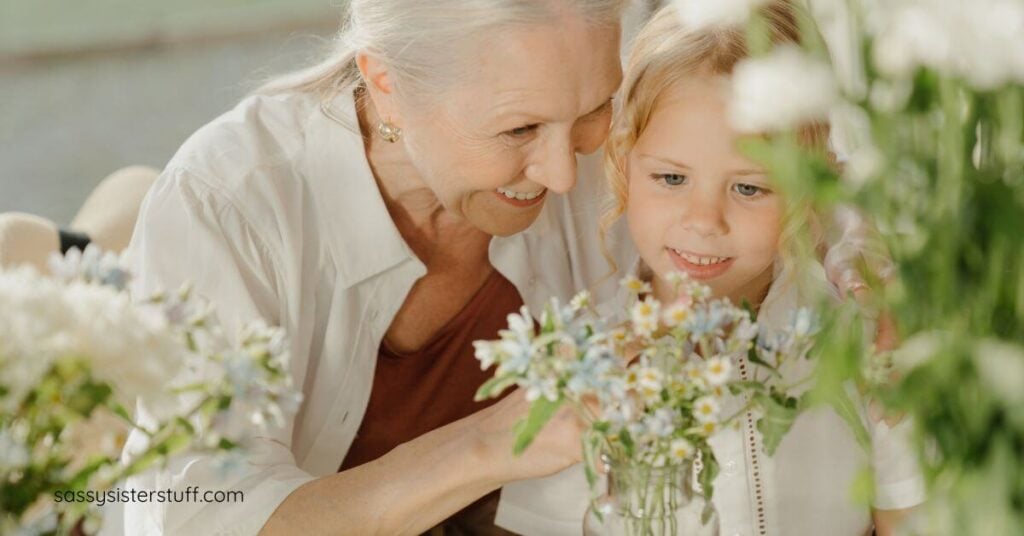
Protect and Pass on Your Legacy, Stories, Relationships, and Practical Plans
Legacy has three buckets. You don’t need to fill them all today. Work on filling them through the years.
- Relational legacy is connection to future generations. That might mean repairing a relationship, or choosing peace and consistency where drama used to live.
- Story legacy is the life lessons you’ve earned. Record voice, write letters, label photos, jot down recipes with the story behind them, or share through mentorship. Your everyday life holds gold.
- Practical legacy is the basic financial planning that lowers stress for the people you love. Review beneficiaries, update a will if you have one, write down medical wishes, and store passwords safely. In 2026, many women are also choosing purposeful philanthropy and mentoring as a living legacy, not just an end-of-life plan.
You can start with one conversation. One folder. One decision.
Have The Conversation that Makes Your Values Clear
Use this simple script with an adult child, partner, or trusted friend:
“I’ve been thinking about what matters to me now. I want to be known for moral integrity. I’m choosing _______________________ next, because it fits my values. What I need from you is _______________________ . And I’m open to hearing what you hope for too.”
Pick a calm time. Not in the car. Not mid-argument. Keep your tone steady and your goal simple: clarity, not control.
Create a “Legacy Folder” in one Afternoon
Make it paper, digital, or both. Progress beats perfection. Make a legacy folder for future generations to have everything they need to carry on your legacy and beliefs.
Include these items in your Legacy Folder:
- Key contacts (people, doctors, close friends).
- A list of important documents (and where they are).
- A basic account list (no need to share passwords in the document itself).
- Beneficiaries to review.
- A short letter to loved ones.
- One page titled “What I Believe” (your values).
More Ways to Create and Live Your Legacy
Here are more practical and reflective exercises to help you figure out your legacy. Once you have internalized the meaning of legacy, you can use any or all of the scripts and ideas we’ve shared here to help you establish your legacy.
There is no single “right” way to figure out your legacy — it’s your story, your life, your lessons, your attitudes, your values. Be honest with yourself and live intentionally to make your story matter.
- The “Vivid Memory” Test: If someone were to tell a story about you ten years from now, what is the one feeling you’d want them to describe? Was it that you made them feel capable? Heard? Safe? Or perhaps challenged? Your legacy is often the consistent emotion you provide to others.
- Identify Your “Natural Friction”: What problems in the world — or your industry — make you the most frustrated? Often, we are remembered for the things we fought to change. Your “annoyances” are usually a compass pointing toward your core values.
- The Reverse Eulogy: Write down three sentences you hope a friend, a colleague, and a family member would say about you at your funeral. If there is a gap between those sentences and how you lived yesterday, that gap is your new to-do list.
- The Emotional Afterglow: What is the one specific feeling people have after interacting with you? That is your real-time legacy.
- The Friction Compass: What problem in the world makes you want to roll up your sleeves and dig in? We are remembered for the things we try to fix.
- Notice what people already trust you for: Ask yourself: What do people come to me for help with? Look for patterns in compliments, referrals, and the problems you solve.
- Pick the people you want to impact: Be specific. “Everyone” is too wide. Think: beginners, busy parents, new business owners, teens, retirees, your community, a certain customer type, etc.
- Choose the feeling you want to leave behind: When someone talks about you later, do you want them to say you were: calming, bold, kind, practical, honest, motivating, generous, or brave?
- Write a one sentence legacy statement: Use this template: “I want to be remembered for helping [who] by [what you do] in a way that is [how you do it].”
Example: “I want to be remembered for helping new creators feel confident by teaching simple writing habits in a kind, no pressure way.” - List what matters to you: Write down 5 to 10 values (Examples: honesty, family, creativity, fairness, faith, learning, health, service). Circle your top 3 and make it your mission to live them.
Pin to your Favorite Pinterest Board for Later
FAQs: What Do You Want Your Legacy to Be?
These frequently asked questions and answers about creating your legacy can be scanned quickly for those of you who need a TL;DR version of information.
Final Thoughts
Your legacy doesn’t have to be loud. It has to be true.
Pick your values, choose tiny actions fueled by visionary thinking, and protect what matters. Your relationships, your stories, your health, and your practical plans all count.
To figure out what you want to be remembered for, start with three simple checks: what you care about most, what you are good at, and who you want to help.
Legacy is like the trail you leave in other people’s hearts and minds.
And when the question rises again, meet it with kindness and honesty. “What Do You Want Your Legacy to Be?” can become the most grounding question of this season, because it points you back to yourself as you seek to create and leave your legacy.
If you find value in reflection and self-discovery, you will love these related articles here on Sassy Sister Stuff. Check them out.
- The Power of Reflection: 25 Questions to Find Your True North in Midlife and Beyond
- 30 Personal Growth Journal Prompts for Self Reflection
- Midlife Reflection & Purpose: Find Meaning in Your Next Chapter
- How to Decide What to Keep During a Life Reset (+ The Ultimate Reset Checklist)
With light and love,
Susan