
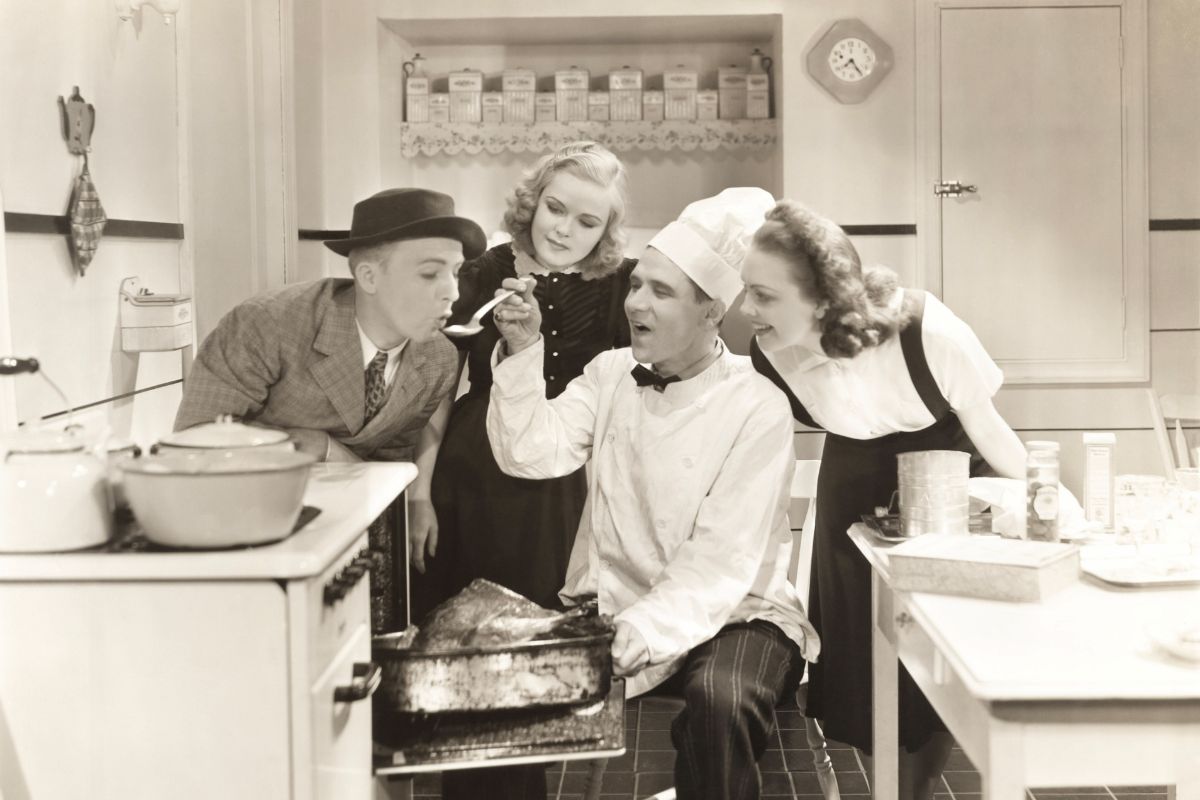
7 Sweet Dinner Rituals Families Loved in the 1940s
Dinner in the 1940s had a rhythm and warmth that can feel missing today. It was a time when everyone gathered, not just to eat, but to connect after a long day.
The way food was served and the traditions followed at the table told a story about family life back then. Each dinner was a small reminder of what mattered most.
Using chafing dishes to keep food warm at the table
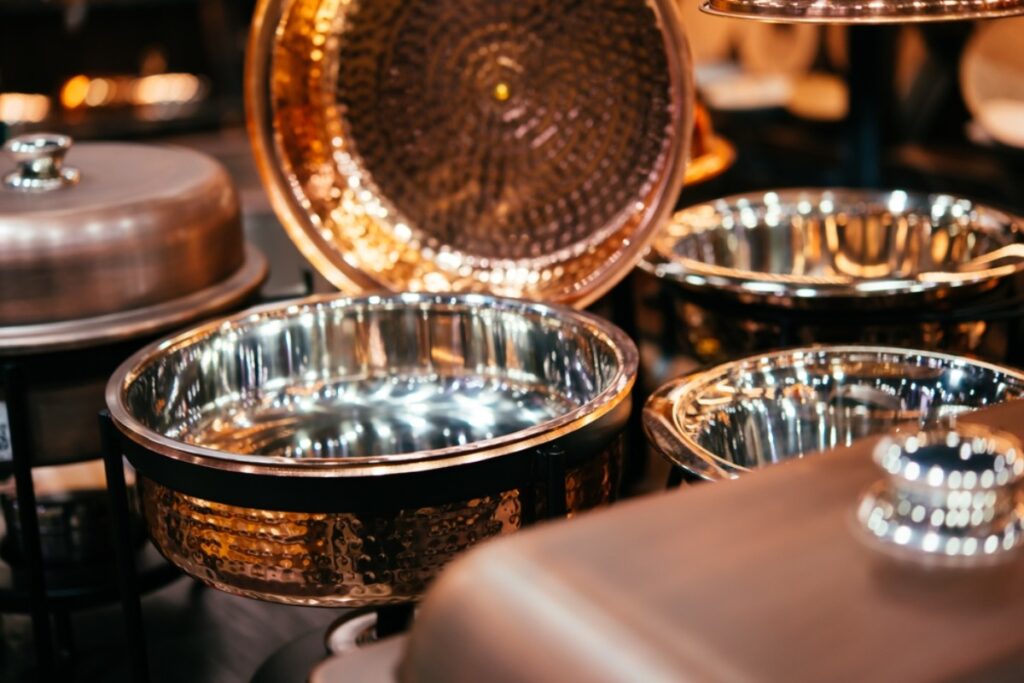
Families often used chafing dishes to keep meals warm. The gentle heat kept food ready for everyone, no matter how long the conversation lasted.
Side dishes like mashed potatoes or vegetables stayed hot and inviting. It made the table feel welcoming and ensured nobody had to rush.
Gathering promptly when Dad came home from work
In the 1940s, dinner started when Dad walked through the door. Everyone knew it was time to drop what they were doing and come together.
Kids would quickly put away their toys or books, and adults finished up chores. This routine made dinner feel important and gave everyone a chance to reconnect.
Saying a gratitude circle before eating
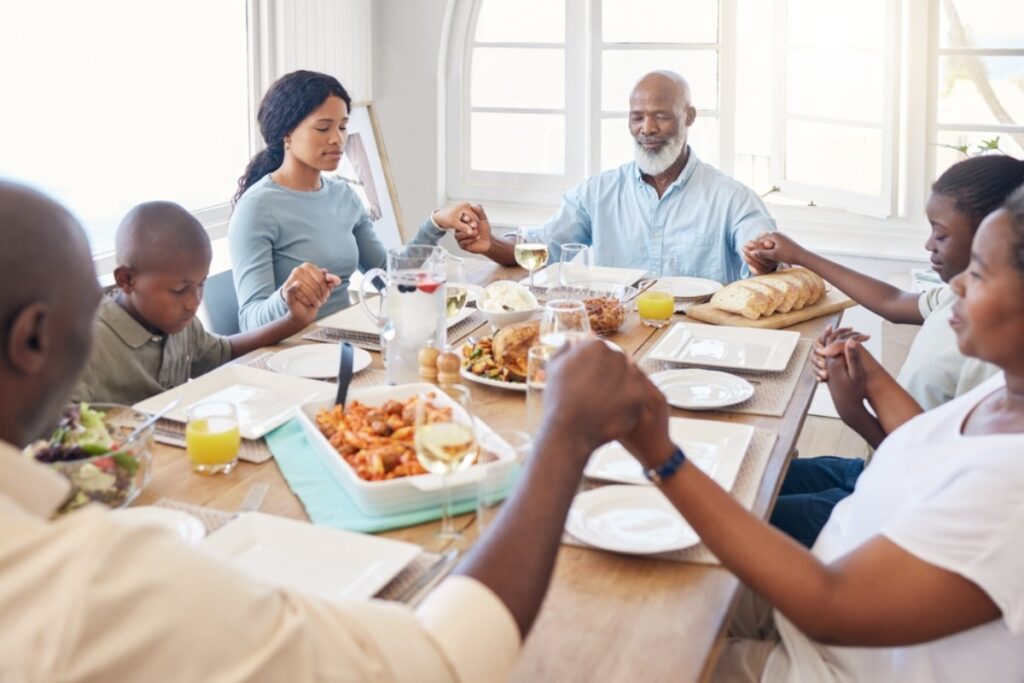
Before eating, families often went around the table sharing something they were thankful for. This gratitude circle made everyone pause and think about the good things in life.
Even a simple thanks for a sunny day or a nice meal could bring everyone closer. It set a calm and positive mood for dinner.
Sharing dad’s goofy jokes during meals
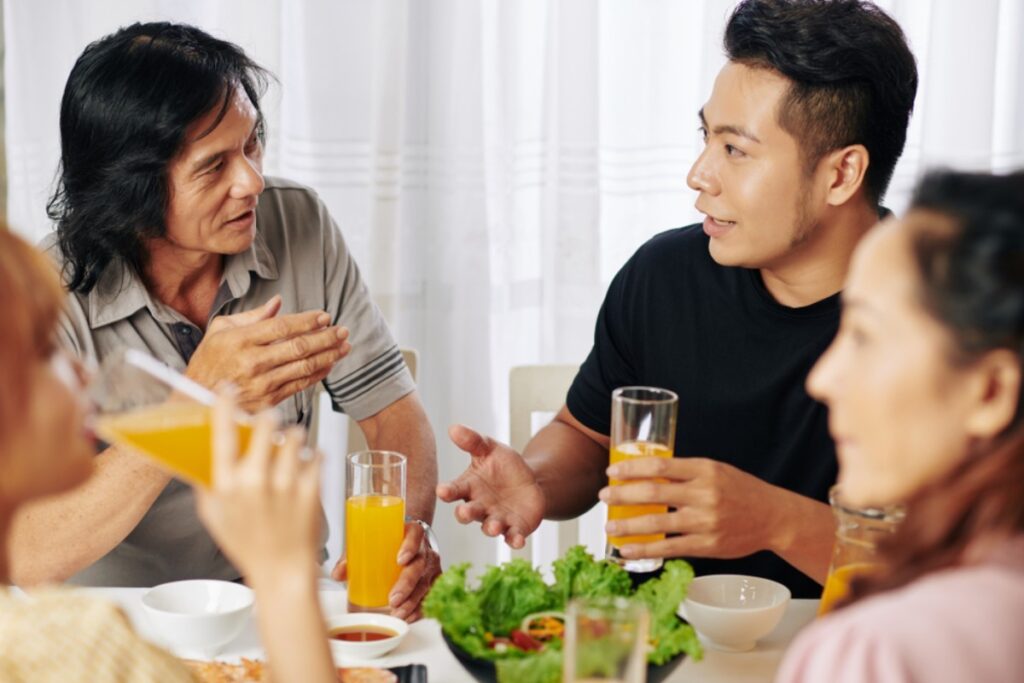
Dad’s jokes were a highlight of dinner. Silly puns and one-liners made everyone smile, even if they were a little cheesy.
These jokes lightened the mood and gave the family something to look forward to each night.
Mom serving handwritten recipe cards for family meals
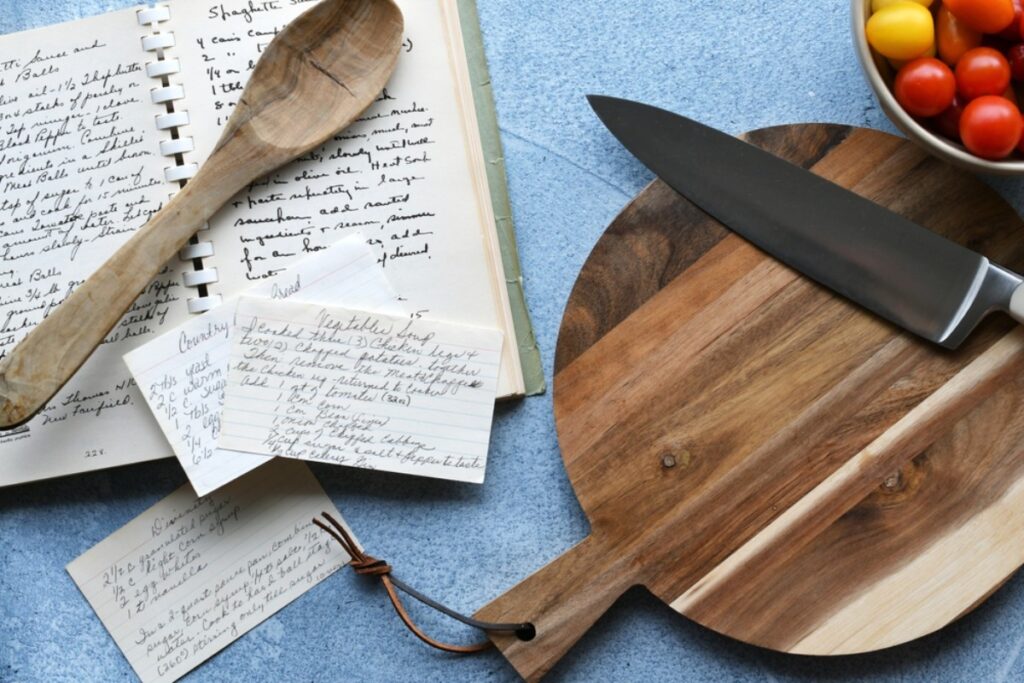
Mom’s recipe cards were a staple in the kitchen. Each one was filled with notes, smudges, and memories.
These handwritten cards held family favorites and brought a sense of tradition to every meal. Passing them down kept family history alive at the table.
Turning off all phones to focus on dinner conversation
Back then, there were no phones to interrupt dinner. Everyone’s attention stayed on the people at the table.
Making dinner a phone-free zone today can help recapture that focus. It’s a chance to share stories and laughter without distractions.
Enjoying Sunday dinners as a weekly family tradition

Sunday dinners were a big deal. Families gathered for a larger meal, taking time to slow down together.
Stories were shared, and traditions were passed on. Even after a busy week, everyone made time for this special ritual.
Cultural Significance of Family Dinners in the 1940s
Family dinners shaped daily life in the 1940s. They reflected the values and routines of the time.
Social Norms and Expectations
Dinners followed certain rules. Men often sat at the head of the table, and children were expected to be polite and listen.
Women usually prepared and served the meal. Conversations stayed friendly and focused on daily life.
Gratitude for the meal and each other was always shown. This helped families feel united, especially during uncertain times.
Influence of World War II on Mealtime
World War II changed what families ate. Rationing meant getting creative with meals and making do with less.
Victory gardens helped stretch food supplies. Dinner became a source of comfort and a reminder of resilience.
Mealtime was a regular opportunity for families to connect. Certain habits and conversations made dinner feel special.
Common Conversation Topics
Dinner talk often centered on the day’s events. Stories about work, school, or news from the community were common.
Updates about loved ones serving in the war were shared. Plans for the future or upcoming family gatherings also brought everyone together.
Etiquette and Table Manners

Dinner used to be a time when everyone paid close attention to manners. Saying “please” and “thank you” was expected.
You had to wait until everyone was served before picking up your fork. Talking with your mouth full was definitely off-limits.
Families often had rules like sitting up straight and using napkins the right way. These small things showed respect to everyone at the table.
Sometimes the head of the family would say a short prayer or express gratitude before the meal. This helped set a calm and thoughtful mood for dinner.