
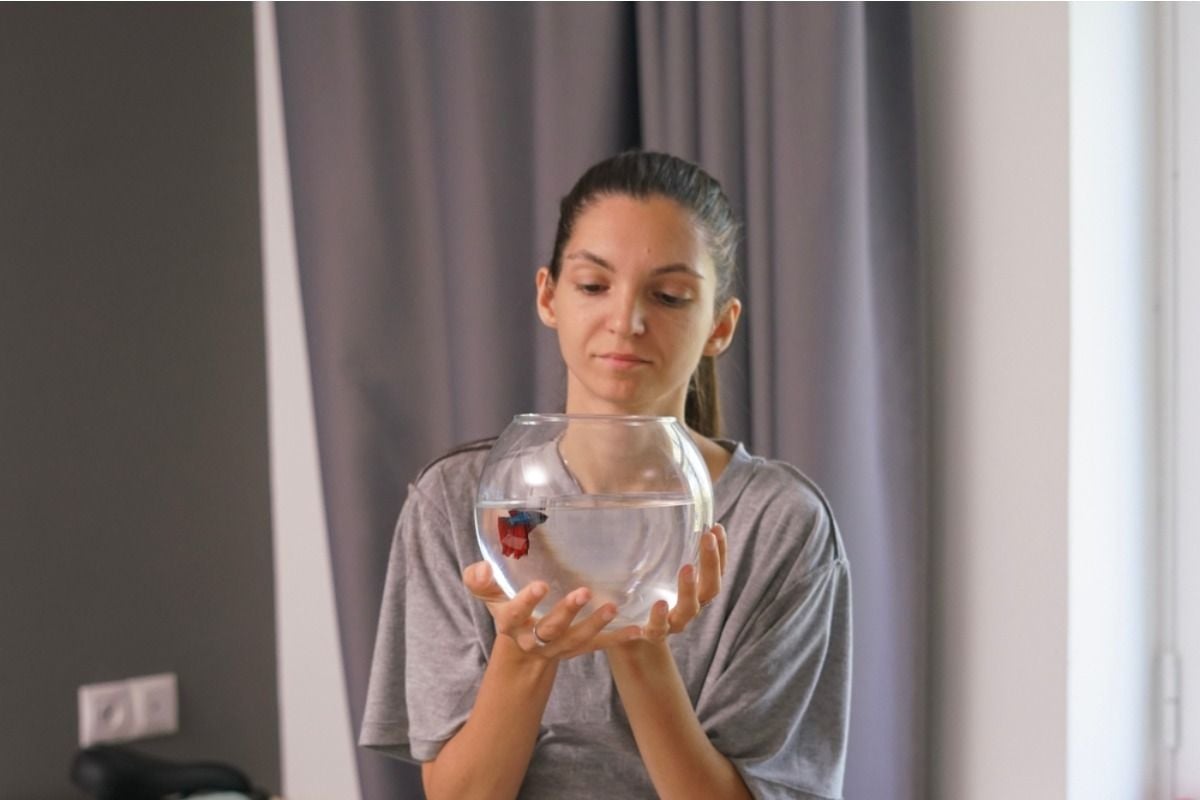
Woman Says Her Fish Died and Her Fiancée Refused to Help Right Away, Then Said She Was the Problem: “I Was Just Trying to Save the Others”
It started with a dead betta fish and became, for one Redditor, a moment that still stings. The user u/Faerie_Dybbuk wrote in r/AITA about coming home from work to find her betta had died before her shift. She didn’t have time to test the tank parameters, so she typed instructions for her then-fiancée to check the water when she got home.
What seems like a small request turned into an argument: her fiancée told her she’d check “in a bit,” the poster replied that she was really upset and hoped they could do it as soon as possible, and then her fiancée and the fiancée’s mom reportedly “ganged up” on her, calling her passive aggressive. She apologized, waited for them to test the water, and went back to work after her break, but this one incident is still lodged in her head.
Exactly what the poster said and why it mattered
The original poster explains the timeline plainly: the betta died before she left for work, she didn’t have time to test tank parameters, and she typed out specific instructions for checking the water. She assumed, reasonably, in her mind, that because they were engaged and her partner knew how much the fish meant to her, the partner would treat it as urgent. When the partner delayed and the poster messaged again to say she was upset and wanted it checked as soon as possible, that’s when the escalation happened. According to the poster, both her partner and the partner’s mother confronted her and accused her of being passive aggressive.
Importantly, the poster calls the relationship abusive overall and notes there were many reasons she left the relationship later. She is still sorting through what was and wasn’t abuse, and this incident is one she’s unsure about: was she really being passive aggressive, or was she asking for help in a moment of grief?
Why a dead fish can feel like a big deal
To anyone who hasn’t loved a pet like a person, getting upset over a fish can seem over-emotional, but pets are emotional touchstones. The poster made that clear: she loves her fish, and losing one felt painful. When you grieve, a little kindness or quick practical help feels enormous. Asking your partner to check tank parameters wasn’t just a chore request, it was a plea to protect the rest of the fish and to validate her feelings.
There’s also the element of expectation. They were engaged, so the poster expected that her partner would recognize both the urgency (testing water can prevent further deaths) and the emotional weight. Being met with delay and then accused of passive aggression instead of empathy is what made this feel like more than a household task gone awry.
Where communication could have been clearer, and where context changes things
Some commenters raised the practical point that the poster could have tested the water herself when she got home. One top comment on the post asked directly: “Why couldn’t you just test the water yourself when you got home? The betta was dead, there was no hurry.” That’s a fair question on its face: if you can do the test and are capable, doing it yourself can remove ambiguity.
But the poster explained she didn’t have time before leaving for work and assumed the partner would act. Context matters: she was grieving, short on time, and relied on a partner who had previously known how important the fish were to her. In emotionally charged moments, reasonable expectations about a partner’s responsiveness are not the same as passive aggression. Asking someone to help is not, by default, a manipulative tactic.
Family dynamics and red flags: the moment mom gets involved
Where the situation took a darker turn, according to commenters and the poster, was when the partner brought her mother into the confrontation. Several responses called that a red flag. One top comment put it bluntly: “I’d say the moment she brought her mother in to harass you was the moment she fully messed
up. Glad you got out of that nonsense. NTA.” Another echoed that sentiment: the real issue wasn’t the text or the upset, it was that the partner made it about herself and escalated by enlisting her mom.
Bringing a parent into a dispute between adults can be a power move, whether intentional or not. For someone the poster describes as having been gaslit in the relationship, that gang-up felt like reinforcement of a pattern: instead of addressing the request, the partner shut down the poster’s feelings and shifted blame. That dynamic, not the initial ask, is what made people on Reddit label the poster NTA.
How commenters reacted and why the community sided with the poster
The top responses on the thread mostly supported the poster. Users like u/BulbasaurRanch and u/dash_Dash_DotDot defended her, calling the partner’s behavior the problematic part and highlighting the mom’s involvement as an escalation. The consensus among those who replied was that asking your partner to help with something that matters to you is normal, and accusing someone of passive aggression for expressing grief is unfair.
There were also reasonable questions: could the poster have done the test herself? Was the tone of the second message sharper than she remembers? Those comments invited nuance, but most readers focused on the broader relationship pattern the poster hinted at, gaslighting, being made to feel wrong for feeling, and being confronted by a partner plus parent.
What To Take From This
This small, painful incident shows how everyday moments can illuminate deeper relationship problems. If you find yourself being shamed for asking for help, especially in grief, it’s worth paying attention. A few practical takeaways: make urgent needs explicit (“Please check the tank as soon as you get home, I’m really worried about the others”), consider backup plans for time-sensitive pet care, and notice how conflicts are handled. Is your partner willing to validate you, or do they deflect and recruit others to your disadvantage?
And if you’re the partner reading this: empathy matters more than being right. A quick “I’m sorry, I’ll check it now” costs nothing and can avoid long-term hurt. If you feel accused, ask a clarifying question instead of bringing in outside allies, that escalation often reveals more about control and communication than the original issue ever did.
Finally, if you’re trying to untangle whether a pattern was abusive, use moments like this as data points. The poster was right to lean on friends as reality anchors while she processed the relationship. Small incidents can expose patterns; when a partner repeatedly dismisses your feelings or brings in family to compound shame, it’s not just bad etiquette, it can be emotional harm. Trust how it made you feel, and let that guide whether you tolerate this kind of behavior or decide you deserve better.